
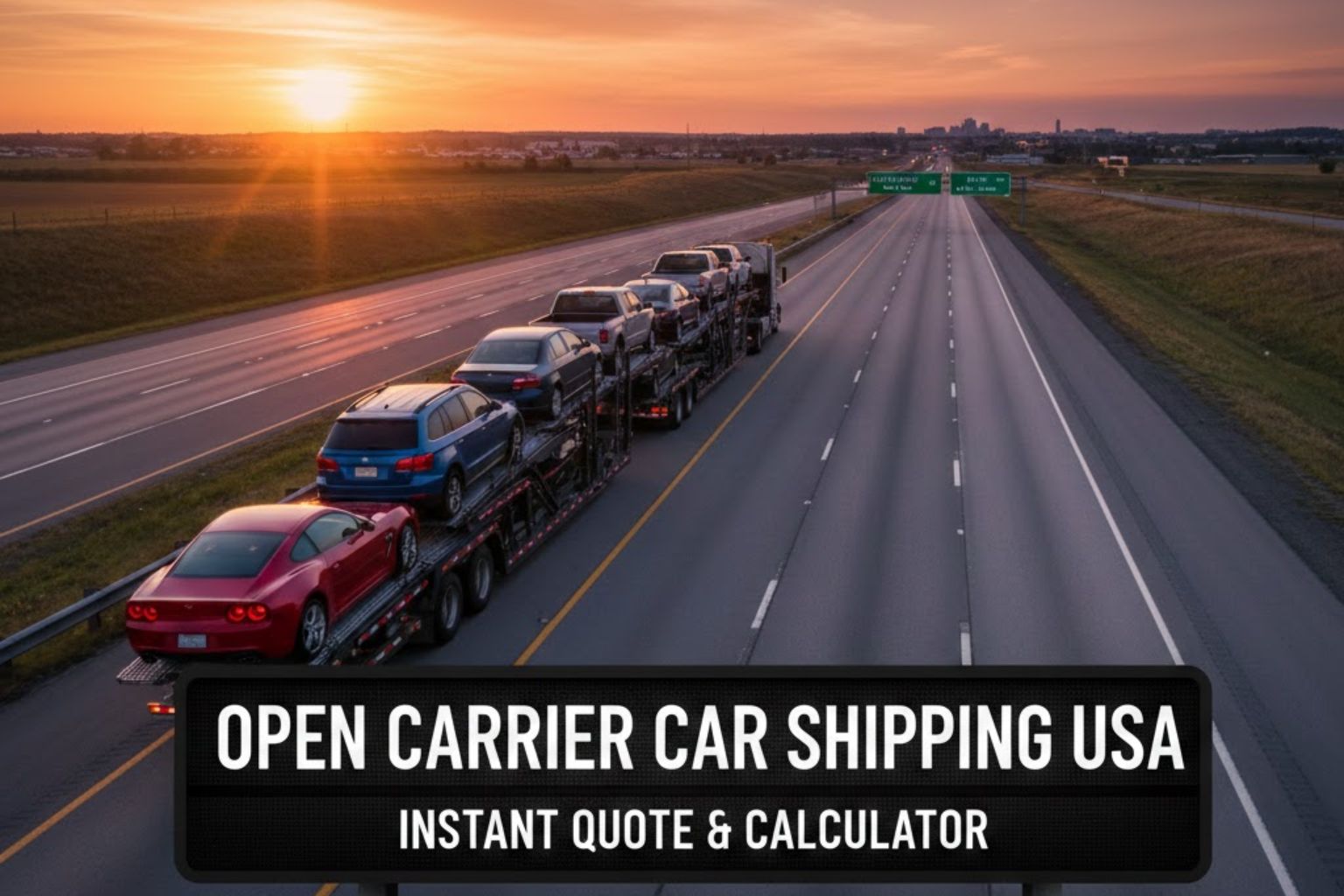
Most people don’t plan car shipping months. It usually starts with a life shift — a job transfer from Chicago to Dallas, buying a vehicle from another state, a college move, or a sudden family obligation. One moment, your car is in your driveway, and the next, you’re trying to figure out how to move it hundreds (or thousands) of miles without driving it yourself.
For most Americans, Open Carrier Car Transport becomes the practical solution — not because it’s the cheapest option on paper, but because it fits real life. It’s flexible. It’s widely available. And it works on the same highway system that already powers the country’s auto industry.
This guide isn’t here to sell you a service. It’s here to help you understand how open carrier shipping actually works in the real world — what affects pricing, timing, safety, and when to choose something different.
Why Open Carrier Shipping Dominates the U.S. Market
If you’ve ever seen multi-car trailers on the highway, you’ve already seen this system in action. Dealerships, rental fleets, auctions, and manufacturers all rely on open carriers because they’re efficient at scale. Multiple vehicles move at once, routes are optimised, and drivers operate on fixed freight corridors that crisscross the country every day.
That’s also why when people need to Ship A Car To Another State, open carriers are almost always available faster than enclosed options.
There are more of these trucks moving between major hubs like:
- Los Angeles
- Houston
- Atlanta
- Chicago
- Phoenix
- Miami
The network already exists — your car joins it.
[Click here to get your free Quote today]
What Really Controls the Cost (It’s Not Just Distance)
Distance matters, but it’s not the only pricing trigger. A 1,200-mile route between two major freight cities can cost less than a 500-mile trip through rural or low-demand areas.
Pricing is influenced by:
- How frequently do drivers run your lane
- Fuel patterns in each region
- Seasonal migration (snowbirds moving to Florida and Arizona)
- Urban vs rural pickup access
- Vehicle size and weight
For example, shipping from New York to Florida or California to Texas often costs less per mile than routes with limited carrier traffic. This is also why instant calculators outperform static “average price” tables — they react to what the market is doing right now.
Why Door-to-Door Pickup Changed the Industry
Terminal shipping used to be common. Today, most customers choose Door-To-Door Auto Transport Services because they remove layers of inconvenience and risk.
Instead of dropping your car at a storage yard:
- The truck comes directly to your home or a nearby meeting street
- The vehicle moves from your location straight into active transport
- Fewer transfers mean fewer inspections and less handling
Even in crowded metro areas like Brooklyn, San Diego, or downtown Miami, carriers coordinate legally accessible nearby pickup points so customers don’t have to deal with terminals at all.
Exposure vs Protection: The Honest Trade-Off With Open Transport
Open carriers do expose your vehicle to the weather. There’s no sugarcoating that. Rain, dust, road mist, and pollen are part of the journey. For most daily cars, this results in nothing more than a post-delivery wash.
What open carriers do protect against is far more critical:
- Load shifting
- Contact between vehicles
- Structural impact
- Theft during highway transit
However, there are situations where exposure matters financially, not just cosmetically. If you own a rare vehicle, restored classic, or high-value collectable, Enclosed Car Transport for Classic Cars becomes less about luxury and more about asset preservation. Paintwork, trim, and undercarriage protection directly affect resale and insurance value.
When Time Matters More Than Price
Sometimes speed isn’t a preference — it’s a necessity. Last-minute job offers, auction purchases with storage penalties, emergency relocations, and military transfers all create time pressure.
This is where Expedited Auto Transportation Services becomes relevant. The truck doesn’t drive faster — federal regulations prevent that. What changes is access: your vehicle is pushed to the front of dispatch queues and matched with the next available qualified carrier, rather than waiting its turn in standard scheduling.
In real terms, this often cuts pickup windows from several days down to 24–48 hours.
What It Takes to Ship a Car Across the Entire Country
If you’re planning to ship a car across the country, your vehicle will likely move along one of the nation’s main freight corridors:
- Southern Route: California → Arizona → Texas → Florida
- Central Route: California → Nevada → Utah → Colorado → Illinois → Ohio → New York
- Northern Route: Washington → Montana → North Dakota → Minnesota → Wisconsin → Michigan → Pennsylvania
Once your vehicle enters one of these lanes, delivery timing becomes more predictable than people expect. Delays usually come from weather systems, congestion near urban hubs, or DOT inspections — not randomness.
Typical coast-to-coast transit runs between 7 and 12 days under normal conditions.
Mobile Homes Follow an Entirely Different Set of Rules
Moving a vehicle and moving a home are not the same operation. Nationwide Mobile Home Transport Services are governed by housing and construction transport laws, not standard auto freight law.
These moves involve:
- Structural load assessments
- Axle-weight compliance
- Oversize permits
- Pilot or escort vehicles
- Wind-speed and terrain restrictions
Relocating a mobile home from Alabama to Georgia, or from Nevada to Arizona, is a regulated engineering operation, not a tow job. Anyone offering cheap, permit-free mobile home transport is creating legal risk for the owner.
The Costliest Mistake First-Time Shippers Make
Most people worry about damage. In reality, the most significant financial loss usually comes from poor timing assumptions.
Missed job start dates. Auction storage penalties. Emergency airline tickets because the car arrived late. Duplicate bookings occur when communication breaks down.
These losses rarely come from accidents — they come from unrealistic expectations. Understanding genuine pickup windows prevents nearly all of them.
Preparing Your Vehicle Is About Protecting Yourself
Before your vehicle is loaded:
- Wash the exterior so inspections are accurate
- Photograph all four sides, wheels, and windshield
- Document fuel level and odometer
- Remove toll tags, passes, and personal items
- Secure loose trim or aftermarket accessories
If a dispute ever arises, your documentation becomes the timeline—not memory.
Frequently Asked Questions & People Also Ask
- Is open carrier car shipping safe in the USA?
Yes. Open carriers handle the majority of vehicle shipments nationwide with extremely low incident rates when operated by insured, DOT-compliant carriers.
- How long does it usually take to ship a car between states?
Most interstate shipments take 3–7 days, while coast-to-coast routes average 7–12 days, depending on lanes and weather.
- What’s the most affordable way to move a vehicle long distance?
For most standard vehicles, Open Carrier Car Transport paired with flexible scheduling keeps total costs lowest.
- Can someone else release my car for pickup if I’m not available?
Yes. As long as a trusted third party can sign at pickup and delivery, you don’t need to be present.
- Is enclosed shipping required for older vehicles?
Not legally required, but Enclosed Car Transport for Classic Cars is strongly recommended for vehicles with restoration or collector value.
Shipping Across the USA Doesn’t Have to Be Complicated
Whether you’re moving from Phoenix to Dallas, buying a car in California for delivery to Florida, or sending a vehicle to family in Illinois, there’s already a system in place to move your vehicle safely. The key is matching your situation with the right level of protection, speed, and cost control — not chasing the lowest headline price.
Get a Free Quote
Ready to secure your peace of mind and the flawless transport of your car? At Minute by Minute Logistics, we provide the expertise, the transparency, and the dedicated service—all the tools you need to feel confident.
✉️ Contact Us
Email: [email protected]
Phone: +1 (205) 565-8118
Follow Us: Facebook | Instagram | LinkedIn
Ready to Book?
Leave a Reply